
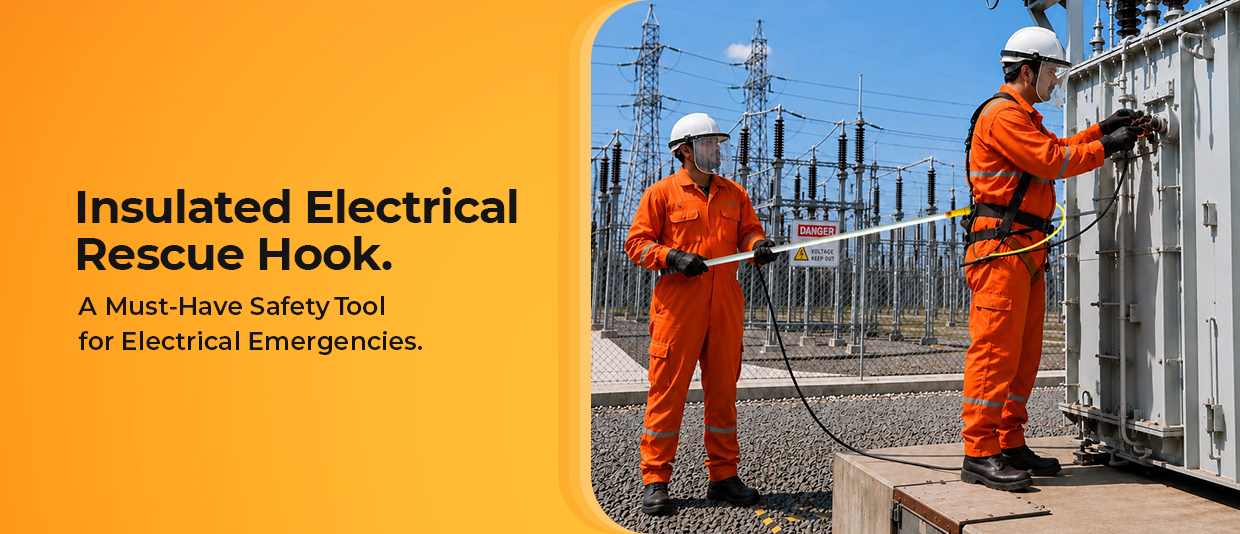
Insulated Electrical Rescue Hook: A Must-Have Safety Tool for Electrical Emergencies
Electrical work always carries some level of risk. Even with proper lockout procedures, insulated tools and personal protective equipment (PPE), accidents can still happen. If someone comes into contact with a live electrical source, the first instinct is often to pull them away. Unfortunately, touching the victim directly can expose the rescuer to the same electrical current.
This is where an Insulated Electrical Rescue Hook becomes invaluable.
Also known as an Electrical Rescue Stick, this emergency safety tool allows trained personnel to remove a person from live electrical equipment without making direct physical contact. It creates a safer way to carry out an electrical rescue while reducing the risk to the person responding.
What Is an Insulated Electrical Rescue Hook?
An Insulated Electrical Rescue Hook is a non-conductive rescue tool used during electrical emergencies. Its primary purpose is to pull an injured person away from live electrical equipment without allowing electricity to pass through the rescuer.
The hook is manufactured using high-quality insulating materials and is designed for workplaces where electrical hazards are present. It is not a replacement for safe work practices, but it is an important part of an emergency response plan.
Why Is an Electrical Rescue Hook Important?
Electrical shock incidents require immediate action. Before first aid or CPR can begin, the victim must first be separated from the electrical source safely.
Without the right rescue equipment, a co-worker attempting to help may also receive an electric shock. An insulated rescue hook provides a safer method of removing the victim while maintaining a safe working distance.
Some of the key advantages include:
- Removes the victim from the live electrical source without direct contact
- Reduces the risk of electrical shock to the rescuer
- Supports faster emergency response
- Forms part of a workplace electrical safety programme
- Suitable for facilities handling medium and high-voltage equipment
Every workplace that operates electrical systems should consider how an emergency rescue would be carried out before an accident occurs.
Where Should an Electrical Rescue Hook Be Installed?
An insulated rescue hook should be mounted close to locations where electrical work is regularly performed. It should always be clearly visible and easy to access during an emergency.
Typical installation locations include:
- Electrical substations
- Switchgear rooms
- Motor Control Centres (MCCs)
- Transformer rooms
- Electrical control panels
- Battery rooms
- UPS rooms
- Electrical testing laboratories
- High-voltage maintenance areas
Most electrical rescue hooks are available in lengths between 4 and 8 feet, with 6 feet being the preferred size for many industrial applications because it provides good reach while remaining easy to handle.
Industries That Use Insulated Electrical Rescue Hooks
Power Generation and Utilities
Power plants, substations and electrical distribution networks involve routine work around high-voltage equipment. Rescue hooks are commonly installed near switchgear and electrical panels to support emergency response.
Oil and Gas
Electrical systems operate alongside hazardous processes in refineries and offshore facilities. A rescue hook allows trained personnel to remove an injured worker without placing themselves in the electrical path.
Cement Industry
Large motors, conveyors, crushers and kilns rely on extensive electrical infrastructure. Rescue hooks should be available wherever maintenance teams work around live electrical equipment.
Telecommunications and Data Centres
Continuous power is the backbone of telecom facilities and data centres. UPS systems, battery banks and electrical distribution panels all present electrical hazards during maintenance activities.
Chemical and Fertiliser Plants
Electrical equipment in chemical processing plants is often exposed to moisture, oils and corrosive substances. Rescue hooks with durable insulating materials are better suited to these demanding environments.
Renewable Energy
Solar farms, wind turbines and battery energy storage systems use both AC and DC electrical systems. Many renewable energy facilities require rescue hooks suitable for higher DC voltage applications.
Steel Industry
Steel plants operate electric arc furnaces, rolling mills and heavy industrial machinery that depend on large electrical installations. Rescue hooks with strong mechanical construction perform well in these conditions.
Pharmaceutical Manufacturing
Although pharmaceutical facilities operate in controlled environments, electrical maintenance remains part of daily operations. Rescue hooks provide an additional level of preparedness during emergency situations.
What Should You Look for When Buying an Insulated Electrical Rescue Hook?
Choosing the right rescue hook involves more than selecting the correct length. The tool should be suitable for the electrical environment in which it will be used.
Before purchasing, consider the following:
- Appropriate voltage rating for your facility
- High-quality non-conductive insulation
- Strong and durable construction
- Comfortable grip for secure handling
- Resistance to moisture, chemicals and weather
- Compliance with recognised electrical safety standards
- Easy inspection and maintenance
A rescue hook should also be inspected regularly. Cracks, damaged insulation or signs of wear can affect its performance and should never be ignored.
Best Practices for Safe Use
An insulated electrical rescue hook should only be used by trained personnel who understand electrical emergency procedures.
Good workplace practice includes:
- Mount the rescue hook near high-risk electrical equipment.
- Keep the mounting location clearly marked and free from obstructions.
- Inspect the hook at scheduled intervals.
- Replace damaged or worn equipment immediately.
- Include rescue hook training in electrical safety programmes and emergency drills.
Regular training gives employees confidence to respond correctly during an emergency.
Frequently Asked Questions
What is an insulated electrical rescue hook used for?
It is used to remove a person from live electrical equipment without making direct physical contact, reducing the risk to the rescuer.
Where should an electrical rescue hook be installed?
It should be installed near substations, switchgear, MCCs, transformer rooms, electrical control panels and other locations where electrical hazards exist.
Is an insulated rescue hook mandatory?
The requirement depends on local regulations, industry standards and workplace risk assessments. Many organisations include rescue hooks as part of their electrical emergency response equipment.
How often should an insulated rescue hook be inspected?
Inspection frequency should follow the manufacturer’s recommendations and your organisation’s safety procedures. Regular visual inspections are recommended to identify damage or deterioration.
Conclusion
Electrical emergencies can happen without warning. Having the right equipment available before an incident occurs gives trained personnel a safer way to respond.
An INSULA® Insulated Electrical Rescue Hook from Bombay Tools is built for industrial facilities where electrical safety is a priority. From power plants and substations to data centres, railways, manufacturing facilities and renewable energy projects, it provides a practical solution for emergency electrical rescue.
Explore the INSULA® range of insulated safety tools and strengthen your workplace’s electrical emergency preparedness with equipment you can rely on.