
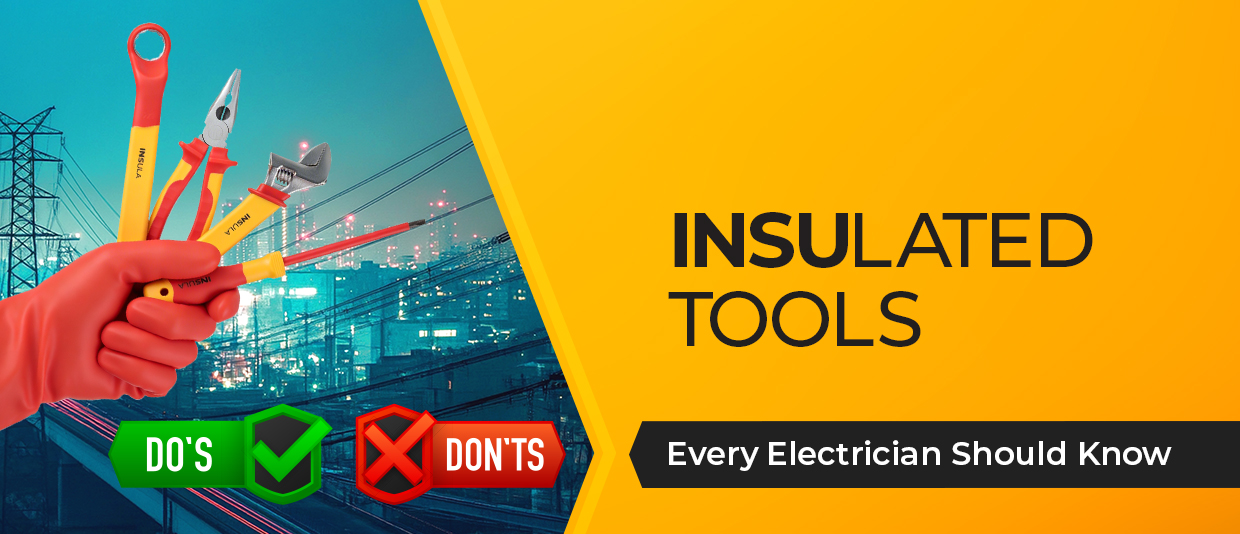
Insulated Tools: Do's and Don'ts Every Technician Should Know
Introduction
Working with high-voltage electricity is no small matter. Whether you're a seasoned technician or just starting, the tools you use and how you use them can mean the difference between a safe job and a life-threatening accident. Insulated tools are your first line of defence against electrical hazards, but only when used correctly.
Here's a practical guide to the do's and don'ts of insulated tools that every electrician should know.
What Are Insulated Tools?
Insulated tools are specially designed hand tools coated with non-conductive materials, typically multiple layers of high-grade polymer that protect the user from electric shock. They are rated to withstand voltages up to 1000V AC / 1500V DC, making them essential for working on live or potentially live circuits.
DO'S
Do inspect your tools before every use. Check for cracks, cuts, or damage to the insulation coating. Even a small nick can compromise the tool's ability to protect you from shock.
Do use tools rated for the voltage you're working with. Always verify that your insulated tools meet the IEC 60900 standard and are rated appropriately for the job at hand. Add about VDE also
Do store them properly. Keep insulated tools in a dry, clean toolbox or roll. Exposure to sharp objects, solvents, or extreme heat can degrade the insulation over time.
Do wear insulated gloves alongside your tools. As seen with INSULA tools, wearing proper electrical-rated gloves adds an extra layer of protection tools and PPE work best together.
Do clean them with a dry or slightly damp cloth. Regular maintenance keeps insulation in good condition and extends the life of your tools.
Do replace damaged tools immediately. Never attempt to repair a cracked or peeling insulated tool with tape or adhesive. If it's compromised, it's done; replace it.
DON'TS
Don't use insulated tools as a substitute for lockout/tag out procedures. Insulated tools reduce risk; they don't eliminate it. Always de-energize circuits where possible before working on them.
Don't expose insulated tools to harsh chemicals or solvents. Petrol, paint thinners, and similar substances can break down the insulating coating rapidly.
Don't use them for unintended purposes. Using a screwdriver as a pry bar or a wrench beyond its torque rating can damage both the tool and its insulation.
Don't stack heavy objects on top of insulated tools. Pressure and impact can cause micro-cracks in the coating that aren't always visible to the naked eye.
Don't ignore the voltage rating. Using a tool rated for 1000 V on a system with higher voltage is extremely dangerous and must be avoided at all costs.
Don't share tools without inspection. If a colleague has been using a tool, inspect it yourself before use. You can't assume someone else caught every scratch or crack.
Why It Matters
Electrical accidents can happen in a fraction of a second. The right insulated tool used the right way significantly reduces the risk of electrical burns, shock, and fatalities. Brands like INSULA are built with electrical safety at the core, offering tools that combine durability with dependable insulation for real-world job sites.
Stay safe, stay informed, and make VDE insulated tools a non-negotiable part of your electrical operations & maintenance.