

MB Lal Committee Report – A Wake-up Call for Indian Industries
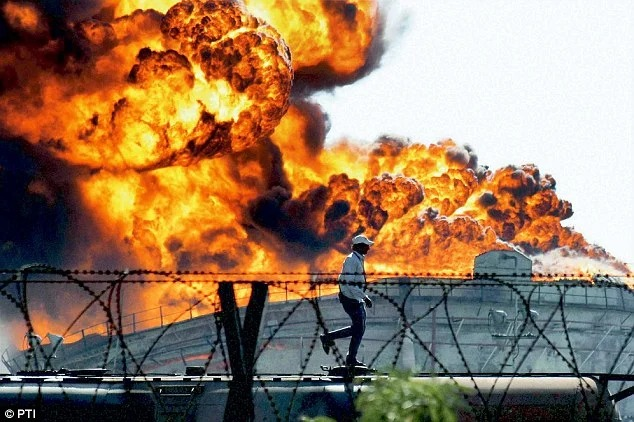
The events on the ill-fated evening of Oct 29, 2009, at IOCL Jaipur terminal was a wake-up call for Oil & Gas and the entire Indian industry. In the aftermath of the events, the MB Lal Committee reviewed the various operations at the terminals from the ground up and suggested a radically new way of operations with safety at the core. No longer was it an afterthought. The findings of the report and its implementation instilled a behavioral change in every person associated with the Oil & Gas industry from top executives, managers of the installations to the fitters and contractors performing the actual tasks.
Before this incident usage of Non-Sparking Tools was limited to safety conscious and extremely high-risk operations and maintenance. However on recommendation of the MB Lal Committee an emergency non-sparking toolkit also called Hazmat kit was to be procured for every installation across India. Shortly after that, there was a mandate to use non-sparking tools for the daily operations at the various installations. This ushered the demand for these tools and it had an infectious effect on the entire industry.
Non-sparking tools are used across various industries not limited to the below list:
|
|
 |  |
Today, as the government steers India towards increased Gas usage, we believe the Gas industry is at a pivotal movement. As they learn from the past experiences of our Oil giants (HPCL, BPCL, and IOCL) the nascent CGD and Bio-gas companies across India are already implementing their operations with safety at their core. City gas distribution with its mission of providing PNG and CNG is building safe infrastructure as natural gas is far more combustible and deadlier than oil products such as motor spirit, HSD, and Kerosene
We at Bombay Tools hope to play our part in providing great quality non-sparking tools necessary for the various industries across India. Our Sparkless® brand of Aluminum Bronze and Beryllium Copper is widely used. These tools are designed with the challenges of operating in tough conditions in mind. Our patented process and uniquely designed tools to match its application make it a best-in-class product.
The MB Lal Committee: A Comprehensive Review
In the aftermath of this catastrophe, the Government of India constituted a high-level committee under the chairmanship of Shri M.B. Lal, the then Director General of the Oil Industry Safety Directorate (OISD). The MB Lal Committee was tasked with conducting a thorough investigation into the incident and reviewing safety protocols across all oil terminals and installations in India.
The committee's approach was revolutionary. Rather than simply identifying what went wrong at Jaipur, they examined operations at terminals from the ground up, questioning every assumption and procedure that had been considered standard practice. The result was a comprehensive report containing 118 specific recommendations that would fundamentally transform how the Oil & Gas industry operated in India.
Key Recommendations That Transformed the Industry
The MB Lal Committee's recommendations covered multiple critical areas:
Engineering and Design Improvements
The committee mandated significant upgrades to tank design, installation of advanced leak detection systems, automatic shutoff mechanisms, and improved monitoring infrastructure. These changes were designed to prevent incidents before they could occur.
Operational and Maintenance Protocols
Thirty-two specific operational and technical measures were introduced to enhance daily safety practices. These included stricter Standard Operating Procedures (SOPs), regular equipment inspections, mandatory safety audits, and comprehensive documentation requirements.
Emergency Response Infrastructure
One of the most significant recommendations was the establishment of Emergency Response Centres (ERCs) specifically equipped to handle major oil fires and industrial emergencies. These centres would be staffed with trained personnel and equipped with specialized firefighting equipment.
Mandatory Use of Non-Sparking Tools
Perhaps one of the most impactful recommendations for day-to-day operations was the mandate for non-sparking tools. The committee recognized that even a tiny spark in a hydrocarbon-rich environment could trigger a disaster.
The Non-Sparking Tools Revolution
Before the Jaipur incident, the usage of non-sparking tools was limited to safety-conscious organizations and extremely high-risk operations. Many installations continued using conventional steel tools, unaware of or underestimating the risks involved. The MB Lal Committee changed this paradigm completely.
The Hazmat Kit Mandate
The committee recommended that every oil installation across India must procure an emergency non-sparking toolkit, commonly known as a Hazmat kit. This kit contains essential tools made from materials like Aluminum Bronze or Beryllium Copper, which do not produce sparks when struck against other surfaces even in the presence of flammable gases or vapors.
From Emergency to Everyday Use
What started as an emergency measure soon evolved into standard practice. Shortly after the Hazmat kit mandate, there was a broader directive to use non-sparking tools for daily operations and maintenance activities at all installations. This wasn't just about having safety equipment available during emergencies; it was about making safety an integral part of every task, every day.
The Ripple Effect
The demand for non-sparking tools surged across India. More importantly, this emphasis on safety tools had an infectious effect that spread beyond the Oil & Gas sector. Other industries handling flammable materials, explosive atmospheres, or hazardous substances began recognizing the critical importance of non-sparking tools.
Lessons for India's Growing Gas Sector
Today, as the government steers India towards increased natural gas usage as a cleaner fuel alternative, the Gas industry stands at a pivotal moment. The nascent City Gas Distribution (CGD) and Bio-gas companies across India have a unique advantage: they can learn from the hard lessons of the past without experiencing their own tragedies first.
Bombay Tools: Supporting India's Safety Infrastructure
At Bombay Tools, we recognize that quality non-sparking tools are not merely products they're lifesaving equipment that stands between workers and potential catastrophe. Our role in India's industrial safety ecosystem goes beyond manufacturing and supply; it's about being partners in protecting lives.
The Sparkless® Advantage
Our Sparkless® brand of non-sparking tools, available in both Aluminum Bronze and Beryllium Copper variants, is widely used across Indian industries. These materials are specifically chosen for their unique properties:
Aluminum Bronze Tools:
| Beryllium Copper Tools:
|
Designed for Real-World Challenges
Our tools are engineered with the harsh realities of Indian industrial environments in mind. From extreme temperatures in refineries to corrosive atmospheres in chemical plants, from the challenging conditions of mining operations to the precision requirements of pharmaceutical manufacturing each tool is designed to perform reliably when it matters most.
Our patented manufacturing process ensures consistent quality and performance. We don't just create generic non-sparking tools; we design application-specific solutions that match the unique challenges of different industrial contexts.
Complete Safety Solutions
From the emergency Hazmat kits mandated for every oil installation to comprehensive toolkits for daily electrical maintenance and operations in explosive atmospheres, we provide complete solutions. Our offerings include:
- Emergency response toolkits (Hazmat kits)
- Maintenance and repair tool sets
- Specialized tools for specific industrial applications
- Custom tool configurations based on facility requirements
The Road Ahead
The MB Lal Committee Report of 2009 was more than just a response to tragedy it was a blueprint for transforming industrial safety culture in India. Fifteen years later, its recommendations continue to save lives and prevent disasters.
As India's industrial landscape evolves, with growing emphasis on gas infrastructure, renewable energy, and advanced manufacturing, the principles enshrined in the MB Lal Report remain as relevant as ever. Safety must be proactive, not reactive. It must be comprehensive, not piecemeal. And it must be supported by the right equipment, including non-sparking tools that eliminate preventable ignition sources.
The 29 lives lost at Jaipur in 2009 serve as a solemn reminder of what's at stake. Their legacy lives on in every worker who returns home safely, in every potential incident prevented, and in every organization that chooses safety over shortcuts.
At Bombay Tools, we're honored to play our part in this ongoing mission providing the tools that help keep India's industrial workforce safe, productive, and protected. Because in the end, no operational goal is worth compromising the safety of the people who make it possible.
Author Box
Yusuf Dalal
Director: Bombay Tools Centre