
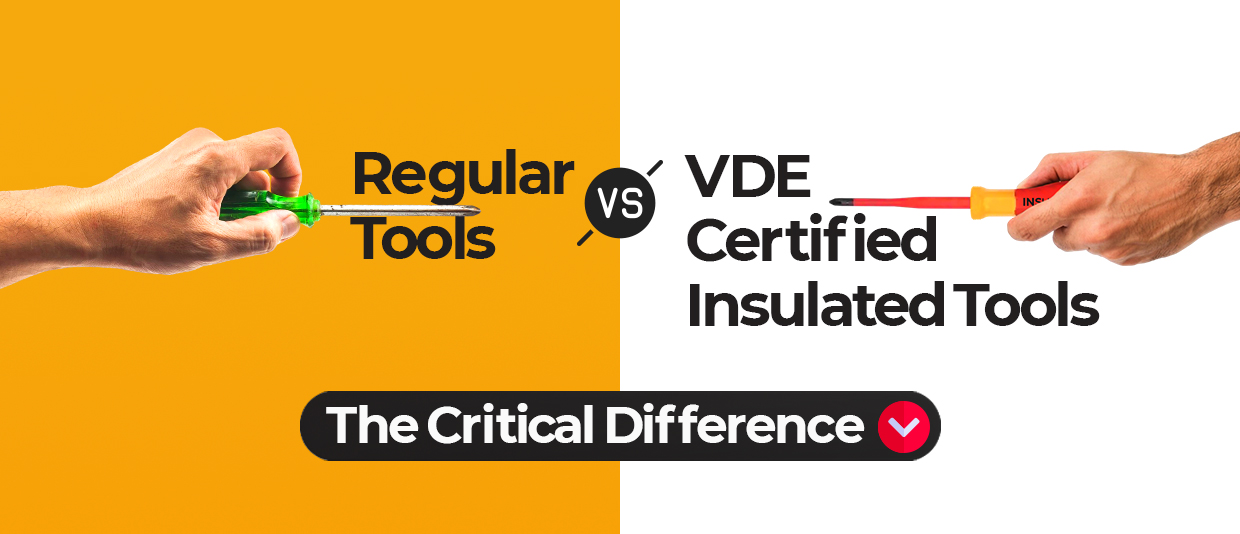
Regular Tools vs VDE Certified Insulated Tools: The Critical Difference
When it comes to electrical work, the tools you choose can literally be a matter of life and death. While regular tools might seem adequate for everyday tasks, professionals working with electrical systems need something far more reliable. This is where VDE-certified insulated tools become not just an option, but a necessity.
Understanding the Safety Gap
Regular tools that you'd find in a typical household toolbox are designed for general-purpose work. They might have some basic insulation, but they're not built to protect you from electrical hazards. VDE-certified tools, on the other hand, are specifically engineered and rigorously tested to keep you safe when working with live electrical systems.
The Problems with Regular Tools
Limited Voltage Protection
Regular tools typically offer voltage protection up to only about 200V. In today's industrial and commercial settings, this is woefully inadequate. Working on systems that operate at higher voltages with these tools puts you at serious risk of electric shock.
Temperature Vulnerability
The insulation on standard tools wasn't designed with extreme conditions in mind. In cold environments, the material becomes brittle and can crack. In hot conditions, it softens and loses its protective properties. This temperature sensitivity creates unpredictable safety risks.
Weak Mechanical Integrity
Under stress, regular tool insulation is prone to cracks, splits, and tears. Even minor physical damage can compromise the electrical protection, creating invisible hazards that put users at risk without any warning signs.
Not Suitable for Professional Use
Simply put, regular tools aren't reliable enough for industrial or professional electrical work. They lack the certifications, testing, and quality standards required for environments where electrical safety is paramount.
The VDE Certified Advantage
Superior Voltage Rating
VDE-certified insulated tools are rated for use up to 1,000V and are tested at an impressive 11,000V. This substantial safety margin ensures that even in unexpected voltage spike situations, the tools maintain their protective properties.
Extreme Temperature Resistance
These tools are designed to perform safely across a temperature range from -40°C to +70°C. Whether you're working in freezing outdoor conditions or in hot industrial environments, VDE-certified tools maintain their insulation integrity.
Robust Construction
The insulation bonding on VDE-certified tools is engineered to withstand impact and stress. This strong mechanical bonding prevents the cracks, splits, and tears that plague regular tools, ensuring long-term reliability even in demanding work environments.
Industry Trust
VDE-certified tools are trusted across critical industries, including oil and gas, power generation, and chemical processing. This trust is built on rigorous testing standards and proven performance in the field.
What Does VDE Certification Mean?
VDE stands for Verband der Elektrotechnik (Association for Electrical, Electronic & Information Technologies), a German organization that sets stringent safety standards for electrical equipment. When tools carry VDE certification, it means they've undergone extensive testing to verify:
- Proper insulation thickness and coverage
- Resistance to electrical current up to specified voltages
- Durability under mechanical stress
- Performance across temperature extremes
- Long-term reliability and material stability
Making the Right Choice
For anyone working with electrical systems, the choice between regular tools and VDE-certified insulated tools isn't really a choice at all. The enhanced safety features, superior voltage protection, and proven reliability of VDE-certified tools make them essential equipment.
While VDE-certified tools may represent a higher initial investment, they're an investment in your safety and the safety of your team. In electrical work, cutting corners on tool quality is simply not worth the risk.
Conclusion
The critical differences between regular tools and VDE-certified insulated tools go far beyond surface-level features. They represent fundamentally different approaches to electrical safety. Regular tools might work for general tasks, but when electricity is involved, only VDE-certified tools provide the protection, reliability, and peace of mind that professional work demands.
Don't compromise on safety. Choose VDE-certified insulated tools for all electrical work, and ensure that you're protected against the unique hazards of working with electrical systems.
Your Partner in Industrial Safety: Bombay Tools Centre
When it comes to sourcing high-quality VDE-certified insulated tools, partnering with the right supplier makes all the difference. Bombay Tools Centre has established itself as a trusted industrial partner, offering a comprehensive range of VDE-certified tools that meet international safety standards.
As specialists in industrial tools and equipment, Bombay Tools understands the critical importance of electrical safety in professional environments. Their commitment to quality ensures that every VDE-certified tool in their inventory has been properly tested and certified to protect workers in high-voltage situations.
Whether you're in the oil and gas sector, power generation, chemical processing, or any industry where electrical safety is paramount, Bombay Tools provides the reliable equipment you need to keep your team safe and your operations running smoothly.
Don't compromise on safety. Choose VDE-certified tools from Bombay Tools your industrial partner committed to keeping you protected on the job.