
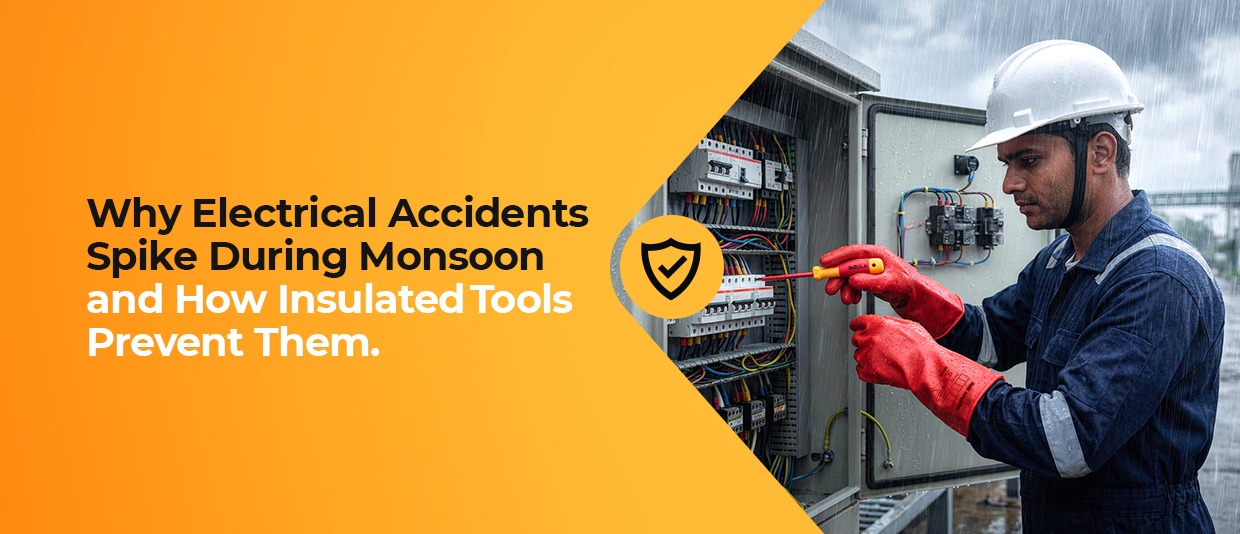
Why Electrical Accidents Spike During Monsoon and How Insulated Tools Prevent Them
Introduction
In monsoons there is an increase in the risk of electrical accidents in factories and plants. Moisture, dampness, and water seepage turn routine maintenance into a serious safety risk. Wet floors, leaking roofs, and damp panels create conditions where even a simple repair job can expose workers to unexpected shocks. Plant owners and safety teams often focus on flooring, drainage, or machinery during monsoon prep but electrical safety is just as critical, and just as often overlooked. Here's why these accidents spike during the rainy season, and how the right tools and precautions can prevent them. In monsoon, electrical accidents in factories and plants rise sharply. Moisture, dampness, and water seepage turn routine maintenance into a serious safety risk. Here's why it happens and how the right tools can prevent it.
Why Electrical Accidents Increase in Monsoon
1. Moisture Increases Conductivity Even small amounts of dampness on panels, wiring, or switchgear can create unexpected current paths, increasing the risk of shocks.
2. Hidden Leaks Reach Live Equipment Roof seepage or wall dampness often goes unnoticed until it reaches electrical panels, junction boxes, or motors causing short circuits or sudden faults.
3. More Maintenance, More Exposure Monsoon brings a spike in electrical repairs and inspections. More hands-on work near live or semi-live equipment means more risk of accidents.
4. Standard Tools Offer No Protection Regular hand tools conduct electricity. If a tool accidentally touches a live part, there's nothing stopping current from passing through to the worker.
How Insulated Tools Prevent These Accidents
VDE-certified insulated tools are tested to protect workers even when working near live circuits. They provide complete protection up to 1000V AC (1500V DC), creating a safety barrier between the worker and any unexpected current.
This means:
- Reduced shock risk during live or near-live maintenance
- Safer working conditions during emergency monsoon repairs
- Compliance with electrical safety standards for industrial sites
Conclusion
Monsoon doesn't just damage equipment it raises the stakes for worker safety during every repair. Switching to insulated tools is a simple, low-cost step that significantly reduces the risk of electrical accidents during the rainy season.
Disclaimer: Insulated tools reduce the risk of electric shock when the tool contacts live parts, but they are not a complete safety solution on their own. They should always be used along with proper PPE (insulated gloves, safety footwear, face shields, etc.) and standard electrical safety protocols for full protection.
Looking to equip your maintenance team with certified insulated tools? Contact us on - info@bombaytools.in to find the right set for your plant.