Why Non-Sparking Tools Are Essential for Hazardous Environments
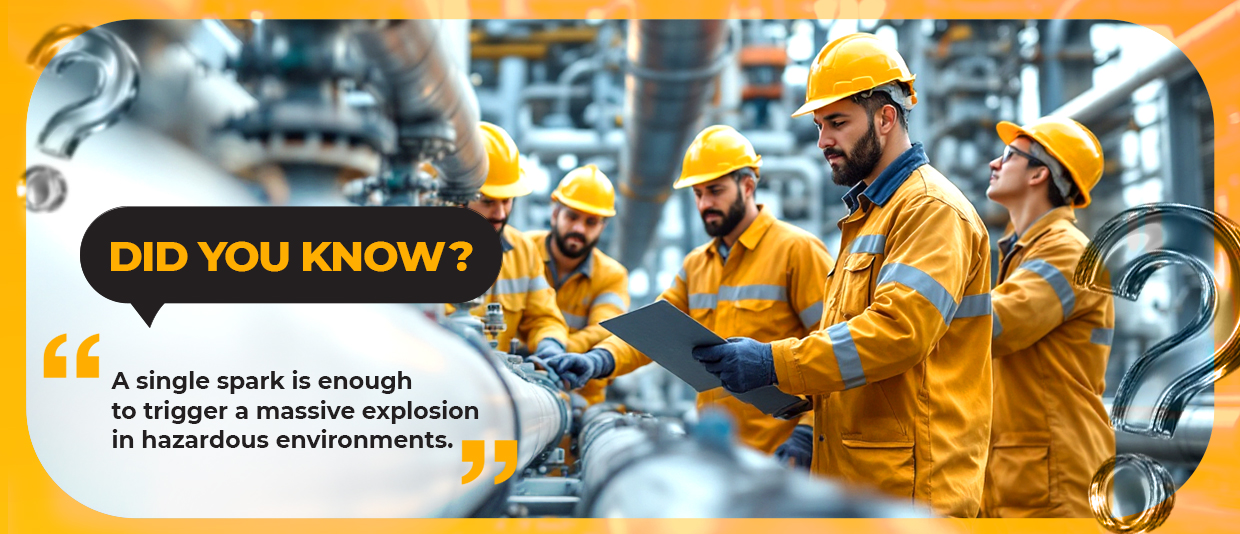
A single spark is enough to trigger a massive explosion in hazardous environments. This isn't just a cautionary statement; it's a critical reality that industries dealing with flammable gases, vapours, and combustible dust face every single day.
Understanding the Risk
In industrial settings such as oil refineries, chemical plants, mining operations, and pharmaceutical manufacturing facilities, the presence of flammable substances creates an atmosphere where even the smallest ignition source can lead to catastrophic consequences. Traditional steel tools, when struck against hard surfaces or used in friction-generating operations, can produce sparks that reach temperatures exceeding 1,000°C more than enough to ignite volatile materials.
What Are Non-Sparking Tools?
Non-sparking tools, also known as Sparkless® tools or safety tools, are specially manufactured from materials that resist creating sparks during impact or friction. Unlike conventional steel tools, these are typically made from copper-based alloys such as:
- Copper-Beryllium (Be-Cu): Offers the highest strength and durability among non-sparking materials
- Aluminum-Bronze (Al-Br): Provides excellent corrosion resistance and spark-free operation
Where Are Non-Sparking Tools Essential?
Industries that mandate the use of non-sparking tools include:
- Oil and Gas: Refineries, drilling operations, and petrochemical facilities
- Chemical Manufacturing: Plants handling volatile chemicals and solvents
- Mining: Coal mines and operations involving combustible dust
- Pharmaceutical: Facilities working with alcohol-based solvents
- Paint and Coating: Environments with flammable vapours
- Grain Handling: Where combustible grain dust is present
Key Benefits Beyond Safety
While preventing explosions is the primary benefit, non-sparking tools offer additional advantages:
- Corrosion Resistance: Many non-sparking alloys naturally resist corrosion better than steel
- Non-Magnetic Properties: Won't interfere with sensitive equipment or magnetic fields
- Compliance: Meet OSHA, ATEX, and other international safety standards
- Long-term Cost Savings: Reduced risk of accidents means lower insurance and liability costs
Making the Right Choice
When selecting non-sparking tools for your facility, consider the specific hazards present in your environment. Copper-beryllium tools are ideal for high-stress applications, while aluminium-bronze offers the best value for most general applications in hazardous zones.
Remember, investing in non-sparking tools isn't just about compliance; it's about protecting your workforce and your facility from devastating accidents. In environments where a single spark can change everything, these specialized tools aren't optional; they're essential.