
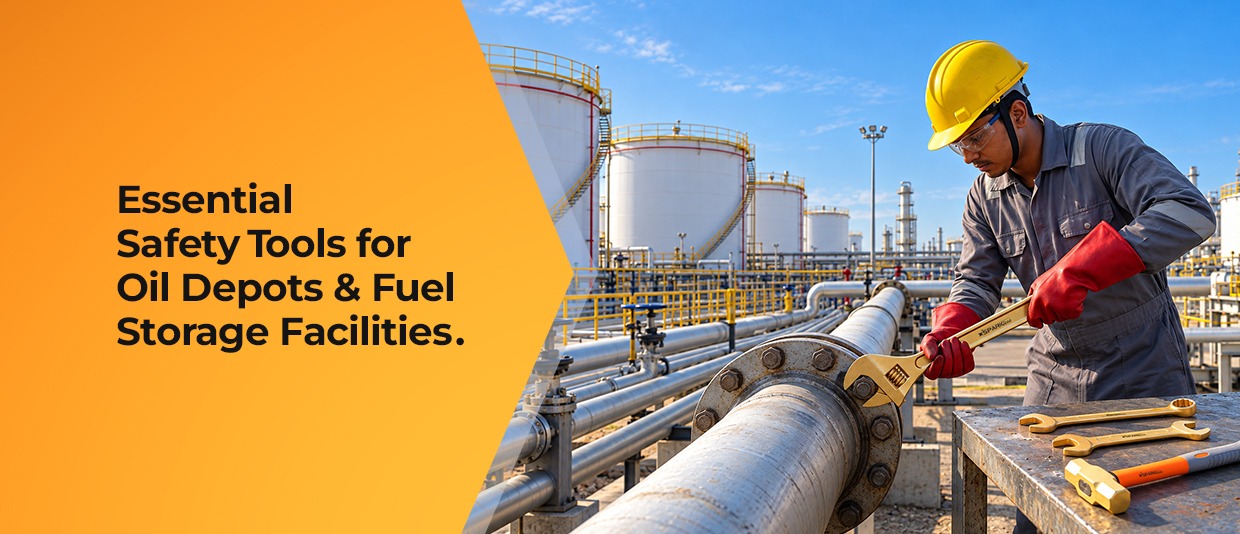
Essential Safety Tools for Oil Depots and Fuel Storage Facilities
Introduction
Oil depots and fuel storage facilities play a vital role in storing and distributing petroleum products such as petrol, diesel, and other flammable liquids. However, these facilities also present significant safety challenges due to the potential presence of flammable vapours, combustible materials, and ignition sources.
During routine maintenance, inspection, and repair work, selecting the right industrial tools is essential to help minimise risks and support safe operations. From non-sparking hand tools to gas detection equipment and personal protective equipment (PPE), every item has a specific role in maintaining workplace safety.
In this blog, we will explore the essential safety tools used in oil depots and fuel storage facilities and understand why choosing the right equipment matters.
1. Understanding Safety Risks in Oil Depots
Oil depots and fuel storage terminals handle hydrocarbons that can release flammable vapours under certain conditions. Maintenance activities involving pipelines, storage tanks, pumps, and valves may introduce additional hazards if the work is not properly planned.
Common risks include:
- Fire and explosion hazards: Flammable vapours may ignite if an effective ignition source is present.
- Mechanical sparks: Certain tool impacts or friction can generate sparks.
- Gas and vapour exposure: Workers may encounter hazardous concentrations of gases or vapours.
- Equipment failure: Improper maintenance or unsuitable tools can damage components and create additional risks.
- Static electricity: Electrostatic discharge can act as an ignition source in certain circumstances.
Understanding these risks helps facilities select suitable tools and implement appropriate safety procedures.
2. Non-Sparking Tools for Hazardous Areas
Non-sparking tools are important for certain maintenance activities in areas where flammable atmospheres may be present. These tools are manufactured from specialised alloys, such as aluminium bronze and beryllium copper, designed to decimate the likelihood of mechanical spark generation compared with conventional steel tools under relevant conditions.
Common types of non-sparking tools include:
- Non-sparking spanners and wrenches: Used for suitable fastening and maintenance tasks involving nuts, bolts, and flanges.
- Non-sparking hammers: Used for appropriate fitting and maintenance applications where impact tools are permitted.
- Non-sparking pliers: Useful for gripping and handling components during selected maintenance tasks.
- Non-sparking screwdrivers: Used for suitable fastening and adjustment work.
- Non-sparking scrapers: Used for selected cleaning and material-removal applications.
The correct tool depends on the task, the surrounding atmosphere, and the facility's safety requirements. Non-sparking tools are designed to minimise the risk of ignition by reducing the likelihood of sparks during tool use, supporting safer operations in hazardous areas when used with appropriate safety measures.
3. Emergency Tool Kits for Oil Terminals – OISD-STD-117*
Oil terminals, refineries, and fuel storage depots need emergency equipment that is readily accessible when urgent maintenance or response activities arise. Having the appropriate tools organised in a dedicated kit helps personnel access essential equipment without wasting time searching for individual items.
The OISD-STD-117 Emergency Tool Kit is designed with reference to the requirements of OISD-STD-117, which addresses fire protection facilities for petroleum depots and terminals. The kit is intended for emergency applications where suitable non-sparking tools are required to help minimise ignition risks.
Depending on the kit configuration, the tools can support selected maintenance and emergency tasks involving industrial equipment, fittings, and components at petroleum handling facilities.
When selecting an emergency tool kit, facilities should consider the nature of the potential emergency, the tools required for the intended tasks, and the site's established emergency response procedures.
An emergency tool kit is one part of a broader emergency preparedness plan. Its availability does not replace emergency response training, fire protection systems, permit-to-work requirements, or other site-specific safety measures.
4. Gas Detection Equipment
Gas detection equipment plays an important role in identifying potentially hazardous concentrations of flammable gases and vapours.
Depending on the application, facilities may use portable gas detectors or fixed gas monitoring systems to assess atmospheric conditions. These instruments must be suitable for the substances being monitored and the intended operating environment.
Gas testing and monitoring should be performed according to established site procedures by trained personnel. A gas detector does not replace ventilation, equipment isolation, work permits, or other required safety controls.
5. Personal Protective Equipment (PPE)
Personal protective equipment helps protect workers from hazards that may remain during industrial maintenance activities.
Depending on the risk assessment and the task, appropriate PPE may include:
- Safety helmets.
- Protective eyewear and suitable gloves.
- Safety footwear.
- Flame-resistant or antistatic clothing where required.
- Hearing protection.
- Respiratory protective equipment when specified by the hazard assessment.
PPE should be selected according to the identified risks, applicable requirements, and workplace procedures. Workers should also receive appropriate training in its correct use and maintenance.
6. Choosing the Right Industrial Safety Tools
Selecting industrial safety tools requires more than comparing prices or choosing a particular tool material. Facilities should evaluate the application, the working conditions, and the potential hazards before making a decision.
Here are some important factors to consider:
Material suitability: Select tools made from materials appropriate for the intended task and hazardous-area requirements. For example, selecting regular CrV tools for work inside civil structures where no hydrocarbon hazard exists. Similarly, selecting Beryllium Copper Tools when working inside storage tanks where danger of fumes is imminent
Quality and durability: Choose tools manufactured to suitable quality specifications and inspect them regularly for damage or excessive wear.
Correct tool selection: Use the right tool for the job. Train workers to not hack any tools for any application they may encounter. This helps prevent equipment damage and unsafe working practices.
Inspection and maintenance: Follow the manufacturer's recommendations and workplace procedures for checking, cleaning, maintaining, and storing tools.
Compliance with safety procedures: Ensure tool selection aligns with the facility's risk assessment, applicable standards, and authorised maintenance procedures.
A well-planned tool selection process can help support efficient maintenance and improve workplace safety.
7. The Importance of a Comprehensive Safety Approach
While appropriate tools are essential, no single tool can guarantee safety in an oil depot or fuel storage facility. Effective risk management requires a combination of suitable equipment, trained personnel, hazard identification, and established operating procedures.
Before maintenance begins, workers should follow applicable permit-to-work requirements, verify necessary equipment isolation, conduct required gas testing, and ensure that potential ignition sources are controlled.
Facilities should also maintain emergency response arrangements and provide workers with regular safety training.
Conclusion
Safety in oil depots and fuel storage facilities depends on identifying hazards and selecting appropriate equipment for every maintenance activity. Non-sparking hand tools, specialised emergency tool kits, gas detection equipment, and suitable PPE all contribute to a broader industrial safety strategy.
Choosing the right tools, maintaining them properly, and following established safety procedures can help reduce risks and support reliable industrial operations.
The Bombay Tools Centre provides industrial tool solutions for demanding applications. Explore the relevant product ranges to identify tools suited to your facility's maintenance requirements and safety procedures.
Choose the right tools. Follow the right procedures. Make industrial safety a priority.